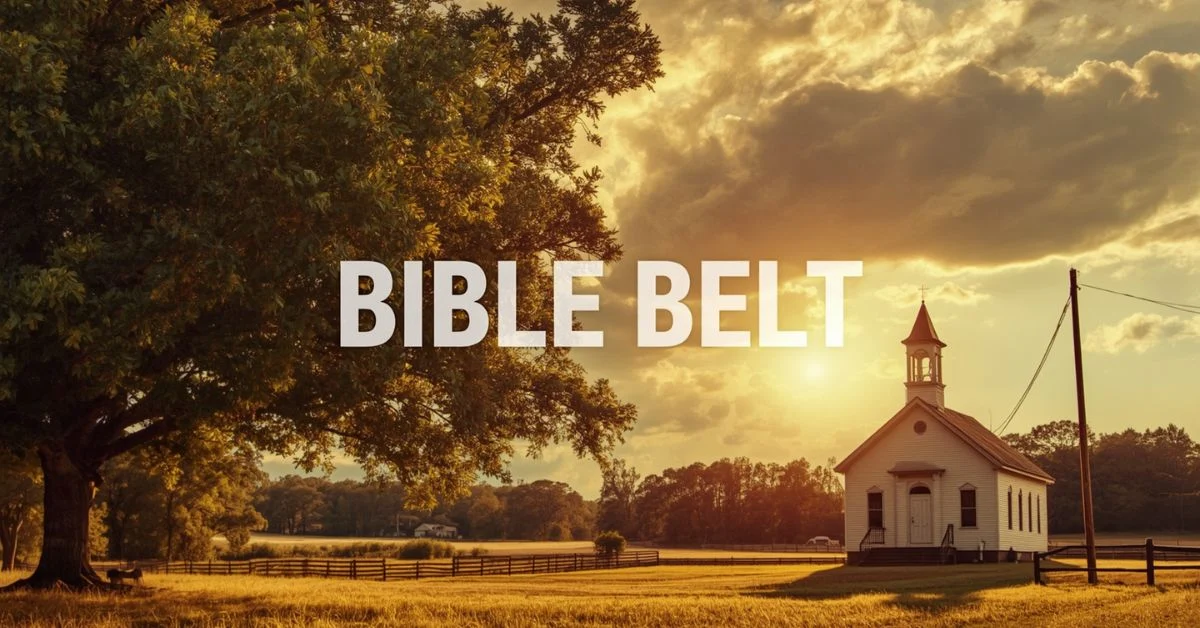
The first time I heard the phrase Bible Belt, I imagined an actual belt connected to the Bible. It sounded strange and a little confusing. I remember hearing someone say, “They live in the Bible Belt,” and I wondered what that meant. Was it a religious place? A historical region? Or something else entirely?
Maybe you have asked the same question.
The term appears in conversations, news reports, movies, books, and social media. Yet many people are not completely sure what it means. Some think it refers only to church attendance. Others believe it describes a certain lifestyle or political viewpoint.
The truth is much simpler.
The Bible Belt meaning is connected to a region of the United States where Christianity, especially Protestant Christianity, has traditionally played a strong role in daily life, culture, and community values.
Understanding the Bible Belt helps us understand an important part of American culture, history, and identity. Let’s explore what this term really means and why it continues to matter today.
What Does Bible Belt Meaning Represent?
The Bible Belt meaning represents a geographic area in the United States where Christian beliefs and church participation have historically been very influential.
The phrase combines two words:
- Bible refers to Christianity and religious faith.
- Belt refers to a region that stretches across several states.
The term does not describe official borders on a map. Instead, it describes a cultural region where religion has traditionally played a major role in everyday life.
Many states commonly associated with the Bible Belt include:
- Texas
- Alabama
- Mississippi
- Georgia
- Tennessee
- Arkansas
- Louisiana
- Kentucky
- Oklahoma
- South Carolina
- North Carolina
While people in these states may have different beliefs and lifestyles, Christianity has historically had a strong presence throughout the region.
Core Meaning Explained Clearly
At its core, the Bible Belt meaning is about the influence of religion on culture and society.
In many Bible Belt communities, churches have often served as more than places of worship. They have also been centers for:
- Community gatherings
- Family activities
- Charity work
- Education
- Social support
For generations, attending church was considered a normal part of weekly life for many families.
The phrase itself was first used in the early 20th century. Journalists noticed that certain areas of the United States had especially high church attendance and strong Christian traditions. Over time, the nickname became widely recognized.
Today, the Bible Belt remains a cultural term rather than a strict geographic definition.
Spiritual Meaning
From a spiritual perspective, the Bible Belt meaning reflects the importance many communities place on faith, guidance, and connection with God.
For many people living in the region, spiritual values shape daily decisions and personal relationships.
Common spiritual themes often include:
- Faith during difficult times
- Community support
- Prayer and worship
- Personal responsibility
- Compassion for others
Of course, not everyone living in the Bible Belt is religious. The term simply reflects the historical influence of Christianity within the region.
Spiritually, the Bible Belt can be seen as a reminder of how shared beliefs often help communities create a sense of belonging and purpose.
Emotional Meaning
The emotional meaning of the Bible Belt can vary from person to person.
For some people, it represents:
- Comfort
- Family traditions
- Community support
- Familiar values
For others, it may bring memories of growing up in close-knit neighborhoods where church events played a major role in social life.
Many people feel a strong emotional connection to the traditions associated with the Bible Belt because those traditions are linked to family history and personal experiences.
Even individuals who no longer follow the same beliefs may still feel connected to the cultural influence that shaped their upbringing.
Psychological Meaning
Psychologically, the Bible Belt highlights how communities influence human behavior and thinking.
People naturally learn from their surroundings.
When faith-based values are common within a community, individuals often absorb those values through:
- Family teachings
- School experiences
- Friendships
- Community events
- Religious gatherings
This does not mean everyone thinks the same way. Rather, it shows how social environments can shape attitudes, habits, and personal identities.
Psychologists often note that people feel safer and more confident when they belong to supportive communities. In many Bible Belt towns, churches have historically provided that sense of connection and stability.
Life Situation Meaning
The Bible Belt meaning can also be understood through everyday life situations.
Career
In some communities, faith-based values may influence workplace relationships, networking opportunities, and local business culture.
Relationships
Religious traditions often play a role in dating, marriage, and family expectations within Bible Belt communities.
Personal Decisions
Many individuals turn to faith, prayer, or religious guidance when facing major life choices.
Community Involvement
Volunteer work, charity efforts, and local events are often connected to churches and faith organizations.
These influences vary greatly from person to person, but they help explain why the Bible Belt remains culturally significant.
Does Bible Belt Meaning Mean Something Bad Will Happen?
No, the Bible Belt meaning does not mean something bad will happen.
The term is simply a cultural and geographic description.
It does not predict events, determine a person’s future, or carry any hidden warning.
Sometimes people hear the phrase and assume it has a negative meaning because it is used during discussions about politics, religion, or social issues. However, the term itself is neutral.
It simply describes a region where Christianity has historically been a strong influence.
Understanding the Bible Belt is about understanding culture, not predicting outcomes.
Is This a Good or Bad Sign?
The Bible Belt meaning is neither inherently good nor bad.
It is best understood as a cultural characteristic.
Some people appreciate the region’s strong sense of community, family traditions, and faith-centered values.
Others may focus on different aspects of the region’s history or social structure.
Like any cultural label, the Bible Belt contains a wide variety of people, beliefs, and experiences.
A balanced view recognizes both the diversity and complexity within the region.
Repeated Experience Meaning
Many people repeatedly hear the term Bible Belt in conversations, media reports, documentaries, and online discussions.
Why does it appear so often?
Usually because the region continues to influence American culture in important ways.
Topics frequently connected to the Bible Belt include:
- Religion
- Education
- Politics
- Family values
- Community traditions
When you notice the phrase repeatedly, it often reflects ongoing cultural discussions rather than anything mysterious.
The human mind naturally pays attention to words that spark curiosity, so once you learn the term, you may begin noticing it more frequently.
Common Variations & Their Meanings
Living in the Bible Belt
This usually means residing in a region where Christian traditions are common and visible in community life.
Growing Up in the Bible Belt
This often refers to being raised in a culture where church attendance and religious values played a significant role.
Moving to the Bible Belt
People may use this phrase when relocating to a state known for strong Christian cultural influences.
Bible Belt Culture
This refers to traditions, social norms, and community practices shaped by religious history.
Modern Bible Belt
This phrase highlights how the region continues to evolve while still maintaining many historical influences.
What Should You Do After Learning About the Bible Belt?
The best approach is simple: stay curious and informed.
You can:
- Learn about regional history
- Explore different perspectives
- Understand cultural traditions
- Respect differing beliefs
- Ask thoughtful questions
The Bible Belt is a fascinating example of how culture, history, and faith can shape communities over time.
You do not have to agree with every tradition to understand and appreciate its influence.
Myths vs Truth
Myth: Everyone in the Bible Belt is deeply religious.
Truth: Religious involvement varies greatly among individuals.
Myth: The Bible Belt has official borders.
Truth: There are no official geographic boundaries.
Myth: All Bible Belt states are identical.
Truth: Each state has its own culture, history, and traditions.
Myth: The term is always positive.
Truth: The term itself is neutral and descriptive.
Myth: The Bible Belt is disappearing completely.
Truth: While demographics change over time, the region remains culturally significant.
Why This Experience Feels So Real
The Bible Belt often feels important because it connects to identity.
People naturally form strong attachments to:
- Family traditions
- Community values
- Childhood experiences
- Shared beliefs
When a region influences these parts of life, it becomes more than a place on a map.
It becomes part of personal stories and collective memory.
That emotional connection helps explain why discussions about the Bible Belt can feel meaningful, even for people who no longer live there.
FAQs About Bible Belt Meaning
What is the simple Bible Belt meaning?
The Bible Belt refers to a region of the United States where Christianity has historically had a strong influence on culture and community life.
Why is it called the Bible Belt?
The name combines “Bible,” representing Christianity, and “Belt,” meaning a broad geographic region.
Which states are part of the Bible Belt?
Commonly included states are Alabama, Mississippi, Georgia, Tennessee, Arkansas, Texas, Kentucky, Oklahoma, and several others in the southern United States.
Is the Bible Belt an official region?
No. It is a cultural term rather than an official geographic designation.
Does everyone in the Bible Belt go to church?
No. Religious participation varies widely among individuals and communities.
Is the Bible Belt only about religion?
No. The term also reflects cultural traditions, social values, and historical influences.
Does the Bible Belt still exist today?
Yes. Although society continues to change, the Bible Belt remains a recognized cultural region.
Is Bible Belt meaning positive or negative?
The term itself is neutral. People’s opinions about it may differ based on their experiences and perspectives.
Conclusion
Understanding the Bible Belt meaning is really about understanding people, culture, and history. What began as a simple nickname grew into a widely recognized term that describes a region where Christianity has long influenced community life.
For some, the Bible Belt represents faith and tradition. For others, it reflects family memories, local culture, or historical identity. Either way, it remains an important part of the American story.
The most helpful thing to remember is that the Bible Belt is not a stereotype or a prediction. It is a cultural description shaped by generations of people, beliefs, and experiences.
When we approach it with curiosity and understanding, we gain a clearer picture of the diverse communities that make up the United States.