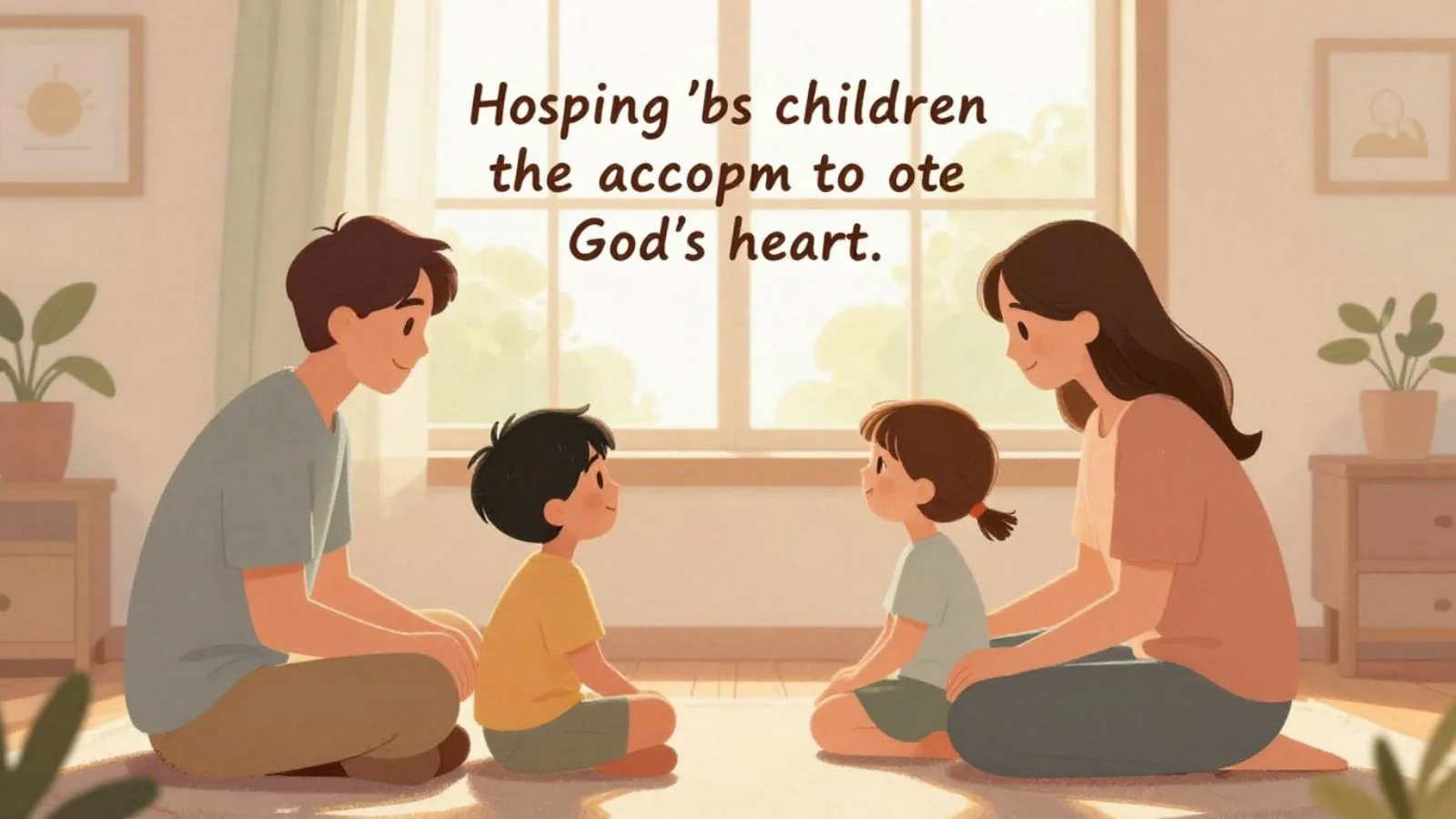
I still remember the night I sat on the edge of my child’s bed, exhausted and unsure. The room was quiet, but my mind was loud. I kept asking myself, Am I doing this right? I wanted to raise a kind, strong, God-loving child, but I felt confused and afraid of making mistakes.
If you’re here reading about Bible verses about raising children, I believe you’ve felt something similar. You love your child deeply. You want to guide them well. But some days, you feel lost. Other days, you feel guilty. And sometimes, you just want reassurance that God understands how hard this is.
Let me tell you this gently: you are not alone. Parenting has always been challenging, even in biblical times. That’s why Scripture speaks so often about children, discipline, love, patience, and grace. These verses are not rules meant to scare us. They are steady hands meant to guide us.
Let’s walk through them together—calmly, honestly, and with hope.
What Does Bible Verses About Raising Children Represent?
When people search for Bible verses about raising children, they are not just looking for quotes. They are looking for direction.
These verses represent:
- God’s heart for children
- God’s wisdom for parents
- Balance between love and guidance
- Hope when parenting feels overwhelming
The Bible does not present parenting as perfection. It presents it as a process—one shaped by patience, teaching, correction, and deep care. These verses remind us that raising children is a shared journey between us and God.
Core Meaning Explained Clearly
At its core, Bible verses about raising children teach us three simple truths:
- Children are a gift, not a burden
- Parents are guides, not controllers
- Love must come before discipline
Scripture does not ask us to raise flawless children. It asks us to raise children who feel loved, taught, and guided toward wisdom. The Bible emphasizes daily instruction, gentle correction, and living by example.
Spiritual Meaning
Spiritually, raising children is an act of stewardship. The Bible teaches that children are entrusted to us for a season.
Verses like “Train up a child in the way he should go” remind us that guidance matters. Not force. Not fear. Guidance.
Spiritually, these verses focus on:
- Teaching faith through daily life
- Showing God’s love through actions
- Leading with humility and prayer
They remind us that God works through imperfect parents. He fills the gaps we cannot.
Emotional Meaning
Emotionally, parenting stretches us. Bible verses about raising children often speak to the heart of the parent, not just the child.
They help us:
- Release guilt
- Calm fear
- Find reassurance
When Scripture tells us to be patient, slow to anger, and gentle, it acknowledges that emotions run high. These verses give us permission to pause, breathe, and try again tomorrow.
Psychological Meaning
From a psychological point of view, these verses support healthy development.
They encourage:
- Consistent boundaries
- Emotional safety
- Trust between parent and child
Children raised with love and guidance develop stronger confidence. The Bible’s advice aligns with how the human mind learns—through repetition, example, and care rather than harsh control.
Life Situation Meaning
In real life, Bible verses about raising children speak into everyday situations:
- When your child disobeys
- When you feel tired and impatient
- When you worry about their future
These verses remind us that parenting is not about winning arguments. It’s about shaping character over time. They encourage steady leadership, not constant correction.
Does Bible Verses About Raising Children Mean Something Bad Will Happen?
No.
Looking for Bible verses about raising children does not mean something bad is coming. It means you care.
People often search these verses during moments of doubt or stress. That’s normal. Biblically, seeking wisdom is a positive sign. It shows responsibility, awareness, and love.
These verses are not warnings. They are support.
Is This a Good or Bad Sign?
This is a good sign.
It shows:
- You want to grow as a parent
- You value guidance
- You are open to learning
In Scripture, parents who seek wisdom are praised, not judged. Wanting biblical guidance usually means you are already doing more right than you think.
Repeated Experience Meaning
If you find yourself returning again and again to Bible verses about raising children, it often means something deeper is happening.
Usually, it points to:
- Unresolved worry
- Fear of failing
- Desire for reassurance
Your heart is asking for peace, not punishment. Re-reading Scripture is often the mind’s way of calming itself and reconnecting with truth.
Common Variations & Their Meanings
Here are a few common situations parents face and how biblical guidance fits:
1. When Your Child Disobeys Often
This points to a need for clear boundaries paired with calm consistency, not anger.
2. When You Feel Like You’re Failing
Scripture reminds us that God’s strength works best in weakness.
3. When You Disagree With Your Child
The Bible encourages listening before correcting.
4. When Parenting Feels Overwhelming
Verses about rest and patience apply to parents too.
5. When You Fear the Future
Scripture teaches trust—one day at a time.
What Should You Do After This Experience?
If you are reading Bible verses about raising children, here are calm, practical steps:
- Read slowly, not desperately
- Choose one verse and reflect on it
- Apply it gently, not strictly
- Speak more, shout less
- Forgive yourself quickly
No rituals. No pressure. Growth happens in small steps.
Myths vs Truth
Myth: Biblical parenting means strict control
Truth: Biblical parenting means loving guidance
Myth: Discipline equals punishment
Truth: Discipline means teaching
Myth: Good parents never struggle
Truth: Even biblical parents struggled
The Bible never hides human weakness. It meets us there.
Why This Experience Feels So Real
Parenting touches our deepest emotions. When we read Scripture about children, it feels personal because it is.
These verses stir:
- Responsibility
- Love
- Fear
- Hope
That emotional weight makes the experience feel intense. But intensity does not mean danger. It means meaning.
Key Bible Verses About Raising Children (Explained Simply)
Here are some foundational verses, explained in human terms:
- Proverbs 22:6 – Teach early with love; habits grow over time
- Ephesians 6:4 – Guide without crushing a child’s spirit
- Psalm 127:3 – Children are a gift, not an achievement
- Deuteronomy 6:6–7 – Teach through daily life, not lectures
- Colossians 3:21 – Harshness breaks confidence
These verses focus on balance, not perfection.
FAQs About Bible Verses About Raising Children
1. What is the most important Bible verse about raising children?
Proverbs 22:6 is often cited because it emphasizes early guidance with purpose.
2. Do Bible verses support gentle parenting?
Yes. Many verses encourage patience, love, and calm instruction.
3. Does the Bible say parents must be strict?
No. It teaches balance—firm guidance with compassion.
4. What does the Bible say about discipline?
Discipline is meant to teach, not harm or shame.
5. Can I be a good parent if I make mistakes?
Absolutely. The Bible acknowledges human imperfection.
6. Should parents force faith on children?
Scripture encourages teaching by example, not force.
7. Why do I feel guilty when reading parenting verses?
Because you care deeply. Guilt often comes from love, not failure.
8. How often should I read Bible verses about parenting?
As often as you need peace and clarity.
Conclusion
If there is one thing I want you to carry with you, it’s this: you are not failing.
Bible verses about raising children are not a checklist. They are a conversation—between you, your child, and God. They exist to guide, comfort, and steady you when parenting feels heavy.
You don’t need to have all the answers today. You just need to keep showing up with love, patience, and humility. Growth happens quietly, over time.
You are doing more right than you think.