I still remember the first time I held my daughter in my arms. Her tiny fingers curled around mine, and a mix of joy and terror rushed through me. I wanted so badly to protect her, guide her, and give her the best life possible. But honestly? I had no idea where to start. Like many parents, I felt the weight of responsibility pressing down on me. I worried about every decision—what to teach, how to discipline, how to nurture her heart. I wondered if I was capable of raising a child who would grow up to be kind, wise, and grounded.
In those moments of doubt, I turned to something that had always comforted me: the Bible. I started reading, not as a scholar, but as a parent seeking real, practical guidance. And slowly, I discovered that the Bible is full of wisdom about raising children—not rules, but gentle guidance on love, patience, and moral grounding.
If you’re here reading this, you might be feeling the same mix of joy and worry. Maybe you’re a parent, grandparent, or mentor, wondering how to guide the young hearts in your care. Let’s explore together the timeless advice found in bible verses about raising children, and how you can apply it in daily life.
What Does Bible Verses About Raising Children Represent?
When we talk about bible verses about raising children, we are really talking about principles. These verses are like a compass. They don’t tell us every tiny detail about what to do each day, but they give us direction—guidance on how to nurture hearts, shape character, and foster wisdom.
Raising a child is not just about feeding them or teaching them to read. It’s about instilling values, encouraging curiosity, modeling behavior, and helping them understand right from wrong. The Bible represents a timeless source of insight for this, offering both spiritual and practical wisdom.
Core Meaning Explained Clearly
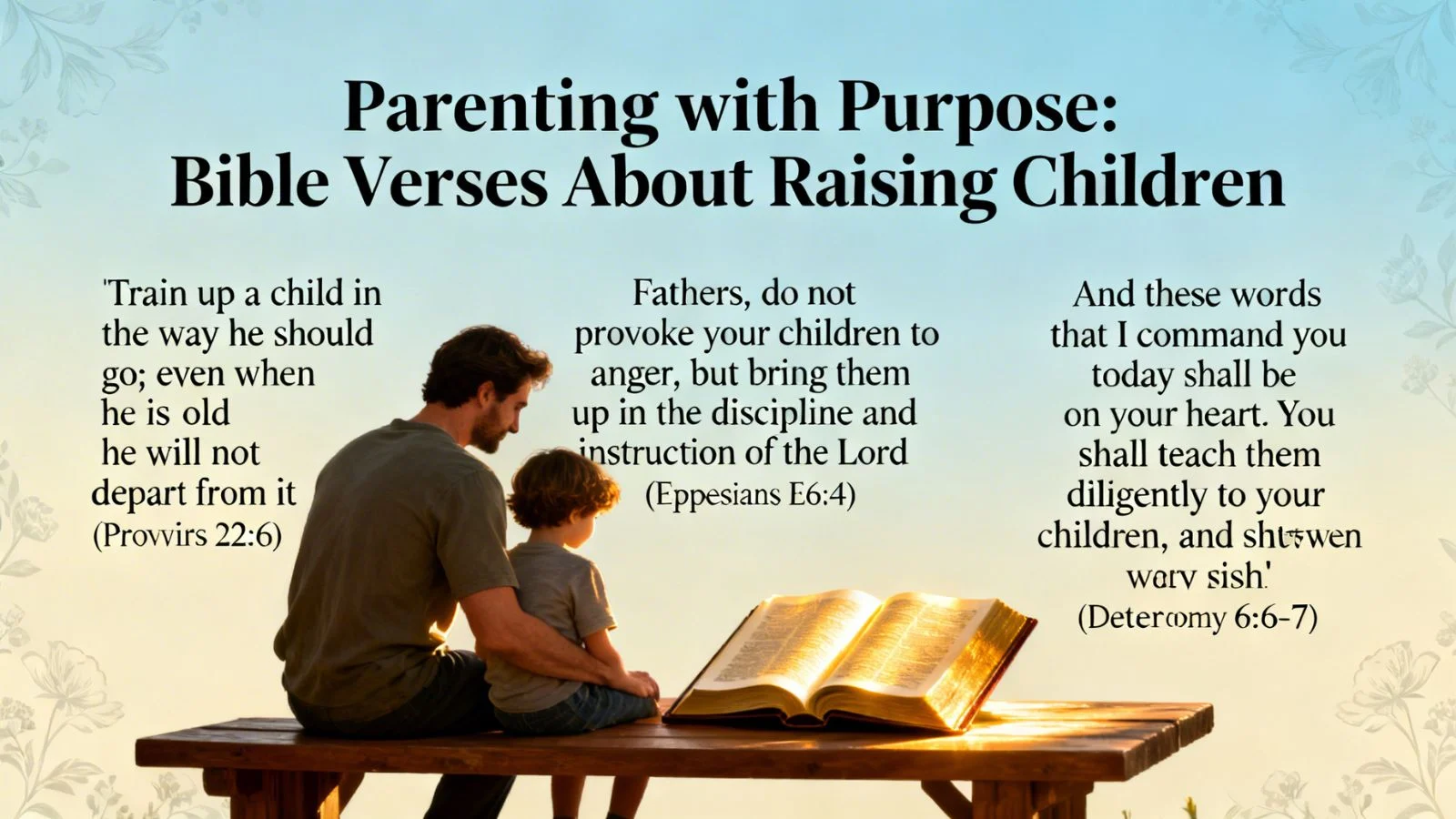
At its core, bible verses about raising children emphasize love, discipline, and guidance. Proverbs 22:6 says, “Train up a child in the way he should go; even when he is old he will not depart from it.” This isn’t a guarantee like a promise card. It’s more like a map—guiding you to teach your child with patience and care, so they grow up grounded in values that last.
These verses encourage parents to balance authority with tenderness. Discipline is not punishment—it’s teaching, shaping, and providing boundaries. Love is not just affection—it’s being present, listening, and modeling integrity.
Spiritual Meaning
Spiritually, bible verses about raising children remind us that children are blessings, and raising them is sacred work. Each child is a soul entrusted to us for a season. The Bible teaches us to approach this role with mindfulness, prayer, and moral clarity.
For example, Ephesians 6:4 says, “Fathers, do not provoke your children to anger, but bring them up in the discipline and instruction of the Lord.” The focus here is guidance with compassion. Spiritually, it reminds us that our patience and example are as important as the words we speak. Children learn faith not just by being told, but by being seen living it.
Emotional Meaning
Emotionally, these verses resonate because raising a child is an intense experience. Fear, worry, pride, and joy are all tangled together. The Bible validates these feelings—it doesn’t shame parents for uncertainty. It says, essentially, “It’s okay to be human, but strive to guide with love.”
When we read these verses, they can calm our anxieties. They remind us that mistakes are part of growth. Children thrive not in perfection, but in an environment of consistent love, understanding, and reassurance. Your calm presence teaches them resilience more than any lesson ever could.
Psychological Meaning
Psychologically, following bible verses about raising children helps structure a child’s environment. Consistency, kindness, and guidance form a foundation for secure attachment, self-esteem, and moral development.
For example, Proverbs 13:24—“Whoever spares the rod hates their child, but the one who loves their child is careful to discipline them”—is not advocating harsh punishment. It highlights the need for boundaries. Children need limits to feel safe, and psychologically, boundaries teach cause-and-effect, self-control, and empathy.
Life Situation Meaning
Raising children affects every part of life—relationships, career, inner peace, and daily decisions. These verses encourage balance. They remind us that parenting is not separate from spiritual life or personal growth. How we act at work, in friendships, and in marriage influences the lessons we teach our children.
Reading bible verses about raising children helps parents reflect: Am I modeling honesty? Patience? Respect? Life situations become teaching moments. A minor conflict at work can be reframed as a lesson in fairness. A small kindness at home becomes a mirror for how they might treat others.
Featured Snippet Section
Does Bible Verses About Raising Children Mean Something Bad Will Happen?
No. Reading these verses does not predict doom or misfortune. Instead, they guide and reassure. Symbolically, they represent awareness and responsibility, not fear.
Is This a Good or Bad Sign?
Following these verses is generally a positive sign. It means you are seeking wisdom, trying to do your best, and nurturing a child thoughtfully. It is neutral to positive, never a curse or warning.
Repeated Experience Meaning
If you keep returning to these verses, it might reflect ongoing concern for your child’s growth or your desire to improve as a parent. That’s natural. It indicates mindfulness, not anxiety.
Common Variations & Their Meanings
- Proverbs 22:6 – Guiding a child with consistent values.
- Ephesians 6:4 – Encouraging nurturing discipline without harshness.
- Colossians 3:21 – Avoiding actions that discourage or frustrate children.
- Psalm 127:3 – Recognizing children as blessings, not obligations.
All these emphasize love, patience, and guidance.
What Should You Do After This Experience?
Calmly apply what resonates in your daily life. Speak gently, set boundaries, show love, and lead by example. No rituals are necessary—what matters is your consistent presence and engagement.
Myths vs Truth
- Myth: The Bible guarantees perfectly obedient children.
Truth: It guides parents to raise children with care, not guarantee outcomes. - Myth: Discipline means punishment.
Truth: Discipline is about teaching, setting boundaries, and fostering responsibility. - Myth: Children must follow faith perfectly.
Truth: Faith grows over time. Children learn more from observing values in action than from pressure.
Why This Experience Feels So Real
Parenting is emotionally intense. Your fears and hopes magnify everyday experiences. That’s why reading bible verses about raising children resonates—they validate your feelings and give concrete guidance. It’s not mystical; it’s deeply human.
FAQs (Real User Questions)
1. What is the best Bible verse for raising children?
Proverbs 22:6 is often cited, emphasizing guidance, consistency, and value-based teaching.
2. How do I apply these verses daily?
Use small, consistent actions: gentle words, listening actively, teaching fairness, showing love.
3. Do these verses promise my child will never go wrong?
No. They offer guidance, not guarantees. Children grow through experiences and learning.
4. Can I use these verses if I’m not religious?
Absolutely. Their lessons about love, guidance, and boundaries are universal.
5. How can I discipline without being harsh?
Set clear rules, explain consequences, and guide with patience. Avoid anger or humiliation.
6. Why do these verses emphasize fathers?
Historical context highlights fathers, but the lessons apply to all caregivers—mothers, grandparents, and mentors alike.
7. How can I teach faith to my child naturally?
Model values in action—kindness, honesty, respect. Children learn more from example than lectures.
8. Is it normal to feel overwhelmed as a parent?
Completely. These verses remind us that mindful guidance matters more than perfection.
Conclusion
Raising children is one of the most profound journeys we can take. The bible verses about raising children are not just words—they are companions, reminding us to love, guide, and model integrity. They validate our fears, soothe our worries, and offer wisdom we can act on every day.
Remember, there is no perfect parent. What matters is showing up, being present, and approaching each moment with love and mindfulness. Your consistent care, patience, and example will leave lasting imprints on your child’s heart.
In the quiet moments when doubt creeps in, return to these verses, breathe, and remember: you are doing a meaningful, sacred work. Your efforts matter, and your love shapes the next generation in ways that words can scarcely capture.
By trusting these principles, staying patient, and living out love daily, you create not just children who follow rules, but adults who embody wisdom, kindness, and resilience. And that, in my experience, is the most profound blessing of all.