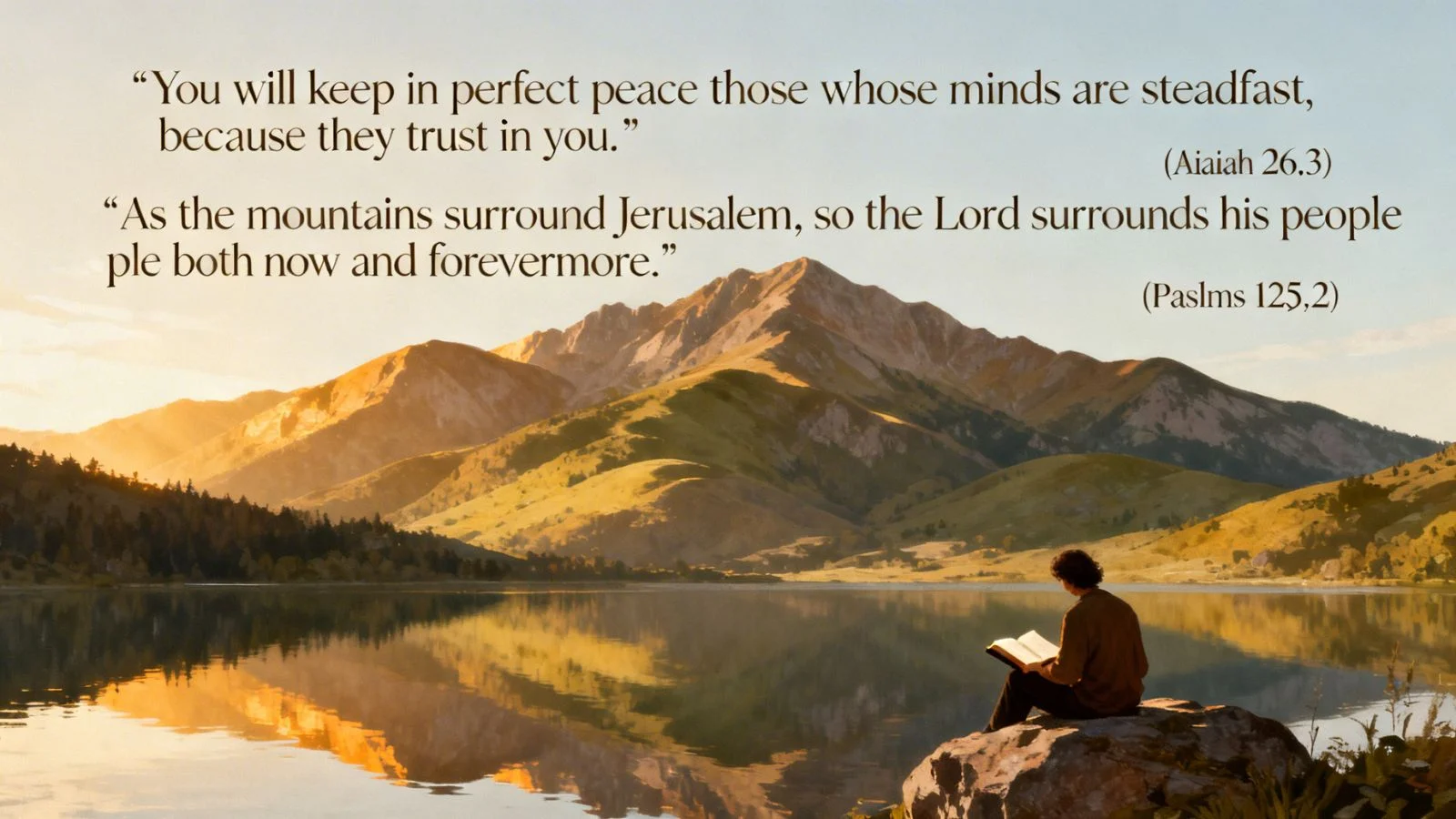
I remember the first time mountains started showing up in my Bible reading in a way I couldn’t ignore.
I was tired. Overworked. Quietly worried about things I didn’t know how to fix. One night, I opened my Bible without a plan and landed on a verse about mountains. It felt oddly personal. Not dramatic. Not scary. Just… steady. Like something was trying to calm me down.
If you’re here searching for bible verses about mountains, I want to speak to you honestly. You’re probably not just looking for scripture. You’re looking for meaning. Reassurance. Maybe clarity in a season that feels heavy or uncertain.
Let’s slow down together and look at what mountains really represent in the Bible—and what that means for your real life.
What Do Bible Verses About Mountains Represent?
In the Bible, mountains are not random scenery.
They represent places of encounter, challenge, and strength.
Mountains often appear when something important is happening:
- A decision
- A promise
- A moment of fear
- A moment of clarity
In The Bible, mountains are where people meet God, hear truth, or face something that feels bigger than them.
Sometimes a mountain is literal.
Often, it’s symbolic.
A mountain can stand for:
- A big problem
- A heavy responsibility
- A turning point
- A reminder that God is greater than what you’re facing
If life feels steep right now, you’re not imagining the connection. The Bible uses mountains because humans understand them instinctively: tall, solid, hard to climb—but not impossible.
Core Meaning Explained Clearly
At its core, bible verses about mountains speak to this truth:
What feels overwhelming to you is not overwhelming to God.
Mountains in scripture don’t exist to scare people. They exist to show contrast—between human limits and divine strength.
When the Bible talks about mountains moving, standing firm, or being climbed, it’s not predicting disasters. It’s explaining how faith, trust, and perspective work when life feels heavy.
Mountains remind us:
- You don’t have to rush
- You don’t have to see the top yet
- You’re allowed to feel small without being powerless
This is grounding, not mystical. Practical, not abstract.
Spiritual Meaning of Mountains in the Bible
Spiritually, mountains represent connection and guidance.
Many key moments happen on mountains:
- Mount Sinai – where Moses received the law
- Mountains where prophets prayed
- Hills where Jesus taught and withdrew to rest
Jesus himself—Jesus Christ—often went to mountains to pray. That detail matters.
Spiritually, this tells us:
- Mountains are places of clarity
- Distance from noise helps us hear truth
- Elevation symbolizes awareness, not escape
If a mountain verse speaks to you right now, it may be pointing to a need for stillness, trust, or realignment, not fear.
There is no warning hidden here.
Only direction.
Emotional Meaning: What Mountains Reflect Inside You
Emotionally, mountains mirror how we feel when life stacks up.
You might feel:
- Pressured
- Stuck
- Afraid of failing
- Unsure where to begin
The Bible doesn’t shame these feelings. It names them without panic.
When scripture says, “Who are you, O great mountain? Before Zerubbabel you will become level ground” (Zechariah 4:7), it’s speaking directly to emotional overwhelm.
It’s saying:
This feels big—but it won’t always feel this way.
Mountains in the Bible normalize struggle without glorifying it.
Psychological Meaning: How the Mind Processes “Mountains”
Psychologically, our minds use physical images to process stress.
A mountain is the brain’s way of saying:
- “This is a lot”
- “I need perspective”
- “I can’t fix this all at once”
Bible verses about mountains work because they meet the mind where it already is.
Instead of denying difficulty, they frame it.
They gently remind you:
- Progress happens step by step
- You don’t climb in one leap
- Rest is part of strength
This isn’t blind faith. It’s emotional regulation rooted in truth.
Life Situation Meaning: Career, Relationships, Decisions
Let’s bring this into real life.
Career
A mountain can represent:
- A demanding job
- Fear of failure
- Feeling behind others
Verses about mountains remind you that growth takes time—and pressure doesn’t mean you’re doing something wrong.
Relationships
A mountain might be:
- A hard conversation
- Emotional distance
- Trust issues
Scripture doesn’t promise instant fixes. It promises support while you walk through it.
Decisions
When you’re standing before a big choice, mountains symbolize:
- Weight
- Responsibility
- The need for wisdom, not panic
Bible verses don’t rush you. They steady you.
Does Bible Verses About Mountains Mean Something Bad Will Happen?
No.
Bible verses about mountains do not mean something bad will happen.
They are symbolic, not predictive.
They speak to:
- Strength during challenge
- Faith during uncertainty
- Stability when emotions feel unsteady
If you came here worried that a mountain verse is a warning—let that fear go.
The Bible uses mountains to reassure, not threaten.
Is This a Good or Bad Sign?
It is usually a positive or neutral sign.
A mountain in scripture often appears when:
- You are growing
- You are being asked to trust
- You are learning patience
It doesn’t mean life will get harder.
It means you are not alone in what already feels hard.
Why Do Bible Verses About Mountains Keep Appearing?
When the same theme shows up again and again, it’s often because something inside you hasn’t settled yet.
Repeated mountain imagery can point to:
- Ongoing stress
- An unresolved decision
- A season that requires endurance
This isn’t spiritual pressure.
It’s awareness.
Your mind and heart are asking for grounding—and scripture meets that need gently.
Common Variations & Their Meanings
1. “Faith Can Move Mountains”
This speaks to inner strength, not control over life events.
It means belief changes how you face problems.
2. Mountains and Prayer
This reflects the need for quiet reflection, not isolation.
3. Standing on a Mountain
Symbolizes perspective—seeing things more clearly with time.
4. Mountains Crumbling or Leveling
Represents stress easing, not disaster.
5. Climbing a Mountain Slowly
Means steady progress, even when results feel far away.
What Should You Do After Reading These Verses?
Nothing dramatic.
No rituals.
No fear-based action.
Just:
- Pause
- Breathe
- Reflect honestly
Ask yourself:
- What feels heavy right now?
- Where do I need patience?
- What step is enough for today?
Bible verses about mountains invite calm movement, not pressure.
Myths vs Truth
Myth: Mountains mean God is testing you
Truth: They mean growth often feels heavy
Myth: A mountain verse predicts hardship
Truth: It speaks to endurance you already have
Myth: You must conquer the mountain
Truth: Sometimes you just walk with support
Why This Experience Feels So Real
Because stress is real.
Because responsibility is real.
Because you care.
The Bible uses mountains because they feel real to us.
They don’t minimize pain.
They contextualize it.
That’s why these verses stay with us.
FAQs About Bible Verses About Mountains
What do mountains symbolize in the Bible?
They symbolize strength, challenge, and closeness to God.
Are mountains a sign of problems?
No. They reflect situations that feel big, not bad.
Why does God speak on mountains?
Because mountains represent clarity and separation from noise.
What does “faith moves mountains” really mean?
It means faith changes how you respond, not reality itself.
Can mountains mean spiritual growth?
Yes. Often slow, steady, and meaningful growth.
Why do I feel emotional reading these verses?
Because they speak directly to stress and hope.
Do mountains mean waiting?
Often, yes—but waiting with purpose.
Conclusion:
If bible verses about mountains keep drawing you in, it’s not because you’re weak.
It’s because you’re human.
Mountains remind us that life has weight—but also direction.
You don’t need to rush.
You don’t need to prove anything.
You don’t need to climb alone.
Sometimes, the message is simple:
Stand still. Look up. You’re stronger than you feel.
And that’s enough for today.